How to Use AI to Build a Sales Funnel (Small Biz)
Disclosure: We may earn a commission when you purchase through links on this site, at no extra cost to you. How we make money.
A few years ago, building a sales funnel meant hiring a copywriter for the landing page, a designer for the layout, and an email specialist for the nurture sequence — then waiting three weeks for drafts and spending another week on revisions. If you were a solo operator or a small team, it often just didn’t happen. You’d wing it with a basic contact form and hope for the best.
That’s no longer the situation. AI writing tools have compressed what used to be a multi-week, multi-person project into something one person can execute in a focused weekend. The quality isn’t “good enough for AI” — it’s genuinely competitive copy that converts. This guide walks you through exactly how to do it, stage by stage.
What a Sales Funnel Actually Looks Like for Small Business
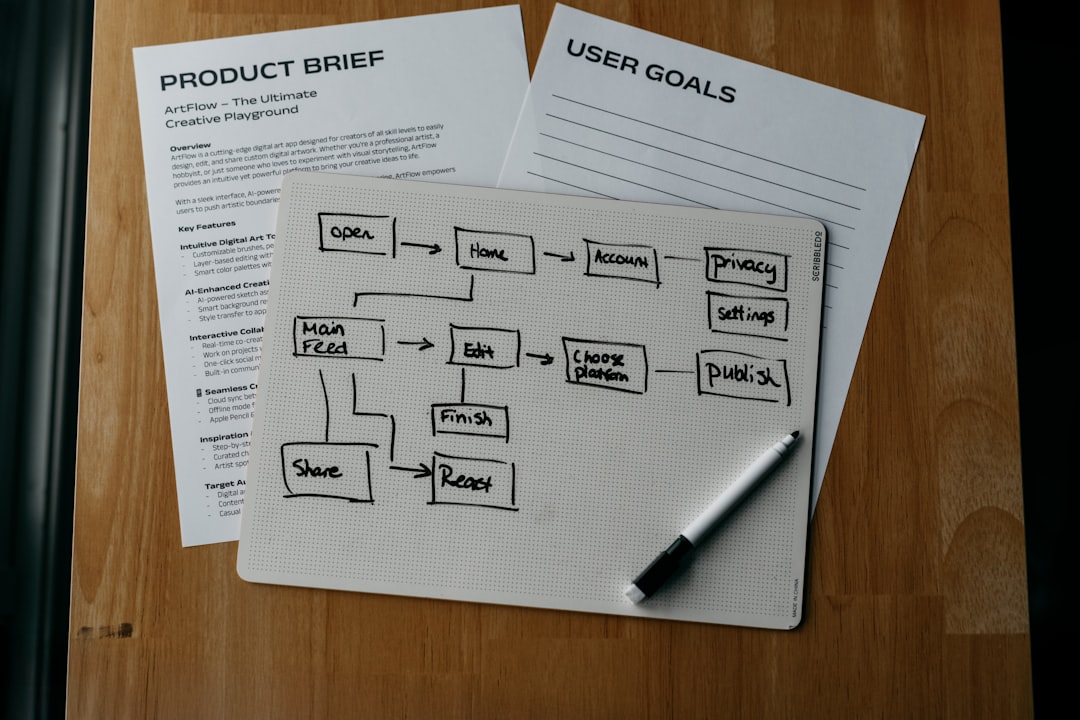
Before you touch any AI tool, get clear on the structure. A small business sales funnel doesn’t need to be complicated. At its core, it’s four stages:
- Awareness: Someone discovers you (via search, social, referral, or ad)
- Interest: They land on your page and want to learn more
- Decision: They’re weighing whether to buy or book
- Action: They convert — purchase, book a call, sign up
Each stage needs specific content: awareness content pulls people in, a landing page captures interest, a lead magnet or offer triggers a decision, and an email sequence closes the action. AI handles all of it — but you need to feed it the right inputs.
Step 1: Map Your Funnel with AI Before You Write Anything
Don’t jump straight into generating copy. Start by using an AI tool to map the funnel structure based on your business type.
Open ChatGPT, Claude, or Jasper’s Boss Mode and prompt it with something like:
“I run a [type of business]. My target customer is [description]. I want to build a sales funnel that ends with [goal — e.g., a booked discovery call / product purchase]. Map out the 5 key stages of this funnel and tell me what content I need at each stage.”
This gives you a blueprint in two minutes. You’ll get a clear list of assets to create: a lead magnet idea, landing page sections, email sequence stages, and a call-to-action structure. Print it out or paste it into a doc — this is your production checklist.
Step 2: Write Your Landing Page Copy with AI
Your landing page is the most important asset in the funnel. It needs a headline that hooks, a subheadline that clarifies the offer, a benefits section, social proof, and a strong call to action. AI tools make this dramatically faster.
Jasper has a dedicated landing page template that walks you through each section. Feed it your product name, your target audience, and three key benefits — it generates multiple variations you can mix and match. Copy.ai has a similar workflow under its “Landing Page Hero Text” template, which is particularly good at writing punchy above-the-fold copy.
For the body of the page — the benefits breakdown, the “who this is for” section, objection handling — Writesonic‘s long-form assistant does solid work if you give it a detailed brief. The key is specificity: vague prompts produce vague copy. Tell the AI exactly who the customer is, what they’ve already tried, and why your offer is different.
Once you have a draft, run it through Surfer SEO‘s Content Editor if you want the page to rank in search. It’ll tell you which terms to include and how to structure the page to compete with what’s already ranking for your keyword.
Step 3: Build Your Lead Magnet
A lead magnet is the free thing you offer in exchange for an email address — a checklist, a mini-guide, a template, a short video training. It should solve one specific problem for your ideal customer and take them one step closer to needing your paid offer.
AI makes building a lead magnet fast. If yours is document-based (a checklist, a PDF guide, a swipe file), Copy.ai or Jasper can draft the full thing from a prompt. If it’s a video — a quick walkthrough or a mini-training — Descript lets you record, transcribe, and edit the whole thing without needing a video editor. You can record a rough cut, clean it up in Descript’s editor, and have a polished 5-minute lead magnet video ready in an afternoon.
For audio lead magnets like a short podcast episode or a recorded training, Otter.ai handles transcription automatically so you can repurpose the audio into a written companion piece with almost no effort. That one piece of content becomes both a listen and a read — two formats, one recording session.
Step 4: Write Your Email Nurture Sequence
The email sequence is where most small business funnels fall apart — not because the emails are bad, but because they never get written. AI removes that excuse entirely.
A basic nurture sequence for a small business funnel needs five to seven emails:
- Welcome email: Deliver the lead magnet, set expectations
- Value email 1: Teach something useful related to the problem you solve
- Value email 2: Share a story or case study
- Value email 3: Address the biggest objection to your offer
- Soft pitch: Introduce your paid offer with low pressure
- Hard pitch: Clear call to action with urgency or a reason to act now
- Follow-up: One last check-in for non-converters
Prompt your AI tool with the sequence structure, your offer details, and the customer’s main pain point. Jasper has an email sequence template built for exactly this. Copy.ai‘s “Email Sequence” workflow lets you input your offer and generates all seven emails in one run — you’ll still need to edit for voice and accuracy, but the structure and persuasion logic will be solid.
For deeper reading on how AI handles email specifically, see our guide on best AI email writing tools for entrepreneurs in 2026 — it covers which tools handle sequence writing best and what prompts work.
Step 5: Create Awareness Content to Feed the Top of the Funnel
A funnel with no traffic is just a document nobody reads. You need awareness content — blog posts, social media, short-form video, or ads — to drive people into the top of the funnel.
AI makes this scalable even for a one-person operation. For blog content, use Surfer SEO to identify what keywords your target customers are searching, then use Jasper or Writesonic to write the posts optimized around those terms. One solid blog post per week, written with AI and optimized with Surfer, can generate consistent organic traffic within a few months.
For social content, the same article you use for the blog can feed your entire social calendar for a week. If you want to go deeper on that workflow, our guide on how to repurpose content with AI for small business walks through the exact process of turning one piece of content into ten.
AI Tools for Sales Funnel Building: Side-by-Side
| Tool | Best For | Funnel Stage | Starting Price |
|---|---|---|---|
| Jasper | Landing pages, email sequences, long-form copy | All stages | $39/mo |
| Copy.ai | Short-form copy, email sequences, CTAs | Decision, Action | Free / $36/mo |
| Writesonic | Landing page copy, blog posts, ads | Awareness, Interest | $16/mo |
| Surfer SEO | SEO-optimized content, keyword research | Awareness | $59/mo |
| Descript | Video lead magnets, video ads, screen recordings | Lead magnet, Interest | Free / $12/mo |
| Otter.ai | Audio transcription, repurposing recordings | Lead magnet, Awareness | Free / $10/mo |
Step 6: Optimize and Iterate with AI
Building the funnel is the first half. The second half is improving it based on what the data tells you.
Once your funnel is live, use AI to help you interpret results and generate test variations. If your landing page conversion rate is low, prompt an AI tool with your current headline and ask for ten alternatives — then A/B test the top three. If your email open rates are suffering, paste your subject lines into Copy.ai and ask for 15 variations optimized for curiosity or specificity.
This iteration loop — data in, AI variations out, test, repeat — is something you can run continuously without needing a growth team. It’s the compounding advantage that small businesses with an AI workflow have over those still doing everything manually.
If you want to see how AI fits into your broader content and SEO strategy, our article on how to use AI tools for small business SEO in 2026 is a natural companion to this one — especially if organic search is your primary awareness channel.
What This Costs vs. What You’d Pay Without AI
To put the value in concrete terms: hiring a copywriter for a full funnel (landing page, five emails, lead magnet) typically runs $2,000–$5,000. A freelance video editor for a lead magnet video adds another $300–$800. SEO content for the awareness stage? Another $500–$1,500 per month if you’re outsourcing it.
With an AI stack — Jasper or Copy.ai for copy, Surfer for SEO, Descript for video — you’re spending roughly $100–$150/month and doing the work yourself in a fraction of the time. The quality delta, for most small business use cases, is negligible. The savings are not.
- AI tools let you build a complete sales funnel — landing page, lead magnet, email sequence, and awareness content — without outsourcing a single step.
- Start by mapping the funnel structure with AI before writing anything. A clear blueprint prevents wasted copy.
- Jasper and Copy.ai handle long-form copy and email sequences best; Surfer SEO ensures your awareness content ranks; Descript and Otter.ai cover video and audio lead magnets.
- The biggest funnel failure is not building one at all. AI eliminates the “I don’t have time to write all that” excuse permanently.
- Optimize one stage at a time using AI-generated test variations — don’t try to fix everything at once.
Frequently Asked Questions
Can AI really write sales funnel copy that converts?
Yes — with the right prompts and your own editing pass, AI-generated funnel copy performs comparably to human-written copy for most small business offers. The key is specificity: give the tool detailed context about your customer, their pain point, and your offer. Generic prompts produce generic copy. Specific prompts produce specific, persuasive copy.
Which AI tool is best for writing email sequences?
Jasper and Copy.ai are both strong for email sequences. Jasper’s Boss Mode lets you maintain context across a long sequence, which keeps the emails coherent. Copy.ai’s sequence workflow is faster for generating multiple variations quickly. Most users find Jasper produces slightly stronger long-form persuasion; Copy.ai wins on speed and volume.
Do I need technical skills to build an AI-powered funnel?
No. The writing tools (Jasper, Copy.ai, Writesonic) are all no-code. Descript requires no video editing experience — you edit video like a text document. You’ll need a basic email platform (Mailchimp, ConvertKit, or similar) to send your sequences, but setup is straightforward and most have free tiers.
How long does it actually take to build a funnel with AI?
Realistically, a weekend of focused work. Day one: map the funnel, write the landing page, build the lead magnet. Day two: write the email sequence, set up the automation, and create one piece of awareness content. From there, you’re iterating and improving — not starting from scratch.
Should I use AI for the whole funnel or just parts of it?
Start with the parts that are slowing you down most. If email is your bottleneck, start there. If you’ve never had a proper landing page, start there. You don’t need to AI-automate everything on day one. But once you see how fast each piece comes together, you’ll end up using it across the whole funnel anyway. For more ways AI can streamline your business content, see our guide on how to automate content creation for small business without coding.
Related Reading
- How to Build a Client Portal for Freelancers in 2026 via AutoFlowGuide
- Pipedrive vs HubSpot CRM for Small Sales Teams 2026 via SaaSSleuth